
Three window treatments cut heat exchange through windows: insulated drapes, solar screens and awnings, and each works in a different way. Eikelberger Awning & Drapery Co. in Sparks makes and installs solar screens and awnings and sells window shades for northern Nevada homes and businesses.
Windows are a great way to let natural light into your home. In fact, many homebuyers prefer homes with lots of windows. However, windows also allow sunlight and heat to enter, which can increase your heating and cooling costs. If you want to know how to reduce heat exchange through windows, check out these three items that do just that.
1. Drapes
Drapes are an affordable and fast way to help reduce heat loss via windows. Insulated drapes, in particular, help block the transfer of heat by adding thermal layers. As long as the drapes are closed, they serve as a barrier between the heated air inside the home and the cold windows.
In the summer, closed thermal drapes can also help block some heat from entering the house. Instead of floating into the living spaces, the heated air gets stuck between the window glass and the drapes.
Thanks to advancements in technology, using drapes is easier than ever. Instead of manually opening and closing the drapes as needed, you can install motorized window coverings. This can be particularly convenient if you have a lot of hard-to-reach windows. Plus, as an added benefit, they are safer for children and pets because there is no dangling string that can get wrapped around necks. See motorization.
2. Solar Screens
If you prefer the sleeker look of shades for your window coverings, consider solar screens. The fabric used to craft these screens works like shade to hinder how much direct light enters the house. Unlike insulated drapes, however, they don't fully block all light thanks to the mesh fabric.
Despite this, they can still help cool rooms in hot climates, which allows you to use less energy and money to cool your home. The Building America Solution Center notes that exterior solar screens allow view "but may block less heat than solid shading." In addition, just like drapes, solar screens help protect your home's interior by blocking UV light that fades and ages fabrics and materials. See solar screens.
3. Awnings
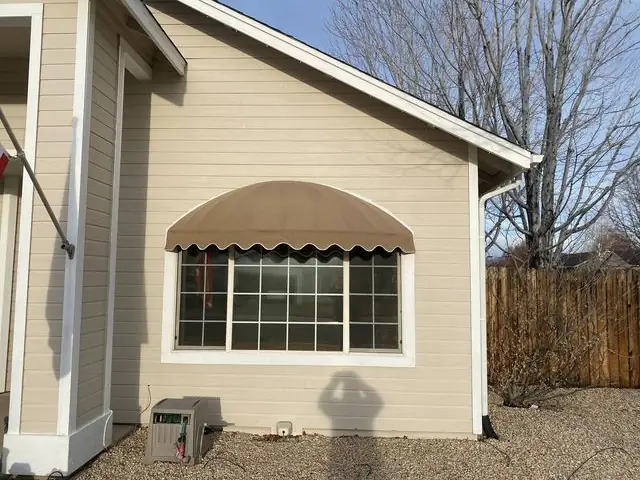
Awnings are an excellent way to help reduce heat gain through windows because of how they work with the summer and winter sun. During the summer, the sun is higher in the sky, so awnings over windows and doors are perfectly positioned to block the sun, preventing direct sunlight from barging into your home and heating it.
In the winter, however, the sun sits lower, which allows the sun to shine under the awnings and into your windows to add natural heat and lower your heating bills. Choosing the right color of awning is also important. In hot climates, a lighter color is better to help reflect some of the natural heat and light.
If you have a patio or deck right outside of big windows or a sliding glass door, a retractable awning may be an attractive choice. This gives you more options regarding how much light you actually want inside the house. For example, it may be a sunny day but cold outside. In this case, you may want natural light.
Retractable awnings require different maintenance. You'll need to keep the system lubricated and clean, so the awning can open and retract easily. However, because the awning can retract, you won't have to worry too much about grime, mold, and mildew during the rainy months. Simply retract the awning to protect it from the elements. See retractable awnings and window awnings.
Putting It Together
There are many ways you can use window coverings and awnings to reduce heat gain and heat loss. Not only does this help reduce monthly heating and cooling costs, but it also provides privacy and prevents UV light from fading fabrics and aging materials. If you would like to know more about window coverings and awnings, contact us at Eikelberger Awning & Drapery Co. today.
Sources (1)
- PNNL / DOE Building America Solution Center: basc.pnnl.gov/resource-guides/window-attachments-solar-control-and-energy-efficiency (checked November 2026)