The four problems an outdoor awning faces are wind, rain and snow, motor trouble and sticky joints, and most are prevented by retracting the awning before bad weather and scheduling a seasonal checkup. Eikelberger Awning & Drapery Co. in Sparks makes, installs and repairs awnings if something does go wrong.
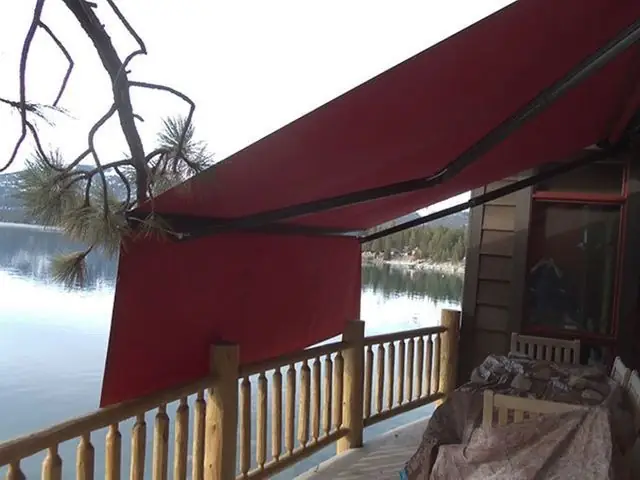
Outdoor awnings carry many benefits, including preventing the sun from making a patio uninhabitable or letting it fade your interior décor. What's more, they're made of durable materials that experts install to last. However, these awnings are an outdoor item, and you can't control conditions there as you would inside your home. Recognize common issues your outdoor awning faces and either prevent those or solve the problems in a timely manner.
Wind Destruction
If you look at your awning, it may resemble a kite in some ways. As whimsical as that resemblance is, an awning's propensity for catching the wind can also be its downfall. Small gusts of wind can tear the fabric away from its mounting rack. Larger gusts can blow the awning clean away. What's more, the wind can break off a branch and send it crashing onto your awning, further damaging it.
Your best course of action is to prevent wind damage. Watch the weather forecast, and retract or remove your awning if any big winds are predicted.
If you miss a report, check all the awnings around your home for wind damage after a storm. You can repair or replace the fabric. However, waiting might cause damage to the framework of the awning. Our awning repair page covers re-covering a frame.
Rain, Snow, and Ice Damage
Another purpose of awnings is to protect you from light rain. Manufacturers make the awnings out of weatherproof material so you don't have to worry about general water damage. However, as sturdy as awnings are constructed to be, they can sag in the middle if too much rain accumulates on top. So, if a heavy rain is forecast, retract or remove your awning.
Snow and ice are also issues. Raindrops or melting snow left on top of the awning can freeze and cause ice. If the ice hangs over the edge, it can drag the awning down. Snow or ice left in the center is even worse than rain for causing an awning to sag. If you know snow is coming, retract or remove your awning. Otherwise, clear the top right after the storm.
Motor Issues
Retractable awnings come in two operation types: manual and motorized. Motor-operated awnings are very convenient because you only have to engage a switch to move the awning. However, when you add a motor to the mix, you can have a new range of issues. Typically, the awning will stop working if you have a problem with the motor.
If that happens, troubleshoot the issue by replacing the batteries to see if it's just the remote. Next, check the motor's limit settings. When the open and close settings are set too close to each other, the awning won't extend. If that doesn't work, try shutting off the motor for a few minutes. The motor may have overheated. See motorized awnings and shades.
Sticky Joints
The joints that pull a retractable awning back can collect dirt and grime. They can also start to develop rust if exposed to prolonged periods of moisture. When that happens, the retractable awning will be hard to operate.
The best cure in this situation is prevention. Schedule a seasonal checkup of your whole awning system. That seasonal checkup is a good time to look for any small rips or holes in the fabric, but focus especially on the arm joints. Watch out for any buildup. Use WD-40 or similar to clean and lubricate the joints if needed. Likewise, ensure you don't have any missing or broken joint parts.
Your awning will be a boon to your home for years to come with just a little vigilance on your part. Know what to watch out for to keep your awning safe. If you need new awnings, contact Eikelberger Awning & Drapery Co.