
Openness is how much of a solar screen's weave is open, and color is the shade of the fabric: a tighter weave and a darker color generally cut more glare and heat but let in less light and a less clear view, while a more open weave in a lighter color keeps more light and view. Eikelberger Awning & Drapery Co. in Sparks designs, makes and installs exterior solar screens and all-weather roll-up shades for Reno and Sparks homes and businesses.
Key points
- Exterior screens keep the heat they absorb outside the home and still let you see out.
- A tighter weave blocks more sun and passes less light; a more open weave keeps light and view.
- Darker colors give a clearer view out; lighter colors look brighter from the street, as a general rule.
- Start with the west and south windows, where the low sun comes in.
- The maker's spec sheet gives the exact openness of each fabric.
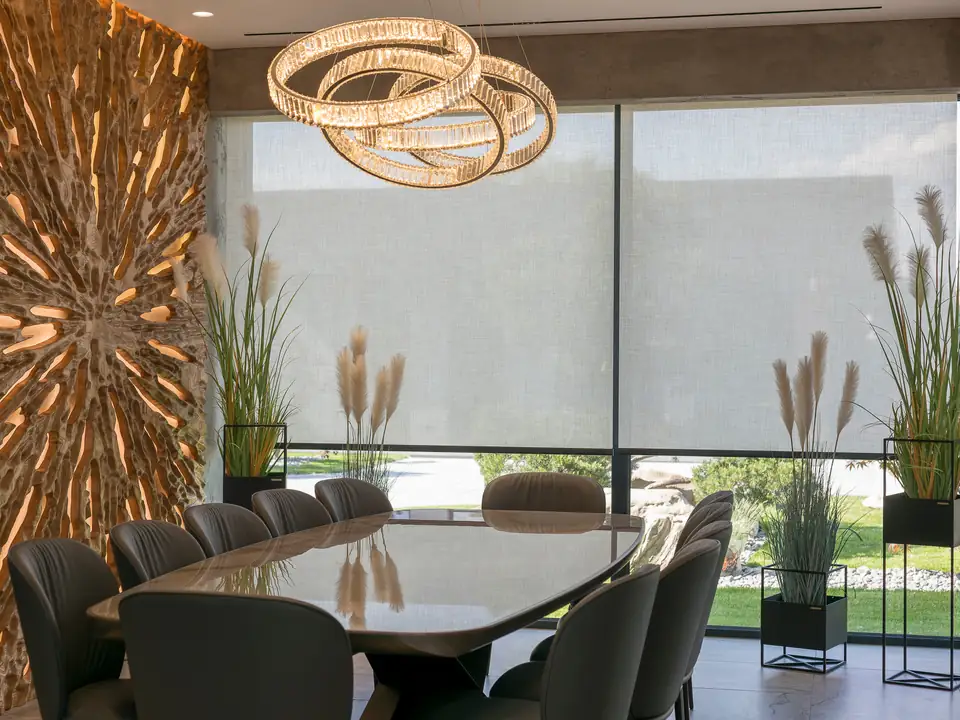
Choosing a solar screen comes down to two settings you can dial in: how open the weave is and what color it is. This guide explains each in plain terms, what the Building America Solution Center says about exterior screens, and where to start on your house.
What Openness Means
Openness describes how much of the screen's surface is open space between the threads. A screen with low openness has a tight weave: it stops more of the sun, cuts more glare and reduces the view out. A screen with higher openness has a looser weave: it lets in more daylight and gives a clearer view, and it stops less of the sun.
There is no single best number. It is a trade between sun control and light. A bedroom window that gets hot western sun may call for a tighter weave, while a living room window with a view you love may call for a more open one. The exact openness for a fabric is on the maker's spec sheet, so the number you compare is the maker's own.
How Color Changes the Look and the View
Color works in two directions. From inside, a darker screen tends to give a sharper view out, because it cuts the glare that washes out the picture. A lighter screen reflects more light and looks brighter from the street, and it can make the room feel a little less shaded. From outside, the screen is part of how your house looks, so color is a design choice as much as a performance one.
It helps to see a fabric against your own glass and siding before you choose. Our awning fabric guide explains how weave and color work in awning cloth.
What the Building America Solution Center Says
The Building America Solution Center, from Pacific Northwest National Laboratory and the U.S. Department of Energy, describes view-preserving external solar screens as a way to cut solar heat and glare while you can still see out. When the sun hits the window, it says the screen "greatly reduces heat gain and glare," and its comparison table notes that screens "may block less heat than solid shading." It also lists that they will reduce airflow for breeze, and it recommends UV-resistant material.
Because the screen sits outside the glass, the heat it absorbs stays outside the home. That is the main reason exterior screens work better for heat than a shade hung inside the window. Efficient Window Coverings, a site that catalogs window attachments, lists exterior solar screens and exterior roller shades in its categories, if you want to read more.
Which Windows to Cover First
The Building America Solution Center says shading east-, south- and west-facing windows in summer is valuable in nearly any U.S. climate, and that in hot climates, east- and west-facing windows are of primary importance. In cold climates with long heating seasons it advises keeping the south side unshaded in winter to gain solar heat. It also notes that direct sunlight is likely to bypass awnings when the sun is not directly overhead, and suggests pairing them with vertical shades for low, angled sun.
On a Reno or Sparks house, that points to the west windows first, where the afternoon sun comes in low and hot, then the south and east. Screens on those windows catch the low sun that slips under an awning, so the two work well together. See solar screens and exterior roll-up shades and window and door awnings.
Choosing for Your Windows
Match the screen to what each window does for you. Think about the view, the glare, the time of day the sun hits and how often you want the screen down.
- For a west window with strong afternoon sun, consider a tighter weave.
- For a window with a view you want to keep, consider a more open weave.
- For a house with a color scheme to match, look at the fabric against the siding.
- For a storefront or office, think about the glare on screens and counters.
- For all of them, ask for the maker's spec sheet so the openness is a number you can compare.
We accurately measure all projects, and our screens are custom-made for precision and functionality in our Sparks shop. Window shades inside are another choice: see roller shades.
Sources (2)
- PNNL / DOE Building America Solution Center: basc.pnnl.gov/resource-guides/window-attachments-solar-control-and-energy-efficiency (checked November 2026)
- Efficient Window Coverings: efficientwindowcoverings.org/ (checked November 2026)